Mental Health and Psychology Icons
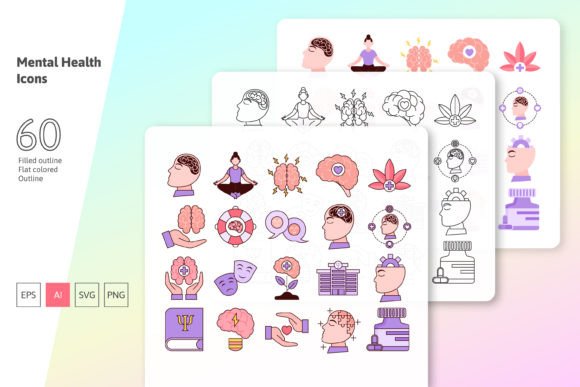
As a blog designer and digital publisher, I'm always on the lookout for high-quality graphic design assets that can elevate content presentation. Mental Health and Psychology Icons is one such collection that stands out for its versatility and editorial quality. With 60 mental health and psychology icons across three distinct styles—Outline, Flat Colored, and Filled Outline—it's a valuable addition to any creative toolkit.
First Impressions: Editorial Mood and Visual Tone
The first thing that catches your eye is the clean, modern aesthetic of the Mental Health and Psychology Icons. Each style offers a different visual mood. The Outline style feels minimal and professional, perfect for a more serious or academic tone. The Flat Colored style brings a touch of vibrancy and approachability, ideal for lifestyle or wellness-focused content. The Filled Outline style strikes a balance between boldness and clarity, making it great for digital guides and social media graphics.
These icons naturally support content niches like mental health, self-care, psychology, and personal development. They feel both professional and accessible, which is crucial for building reader trust in editorial design.
Real Publishing Use Cases
Whether you're creating blog graphics, Pinterest pins, or social media visuals, Mental Health and Psychology Icons can be used in a variety of ways. For example, they work well as featured images for articles about mindfulness, anxiety, or therapy. They also make excellent article headers, helping to break up text and guide readers through content.
In digital marketing, these icons can enhance lead magnets, downloadable worksheets, and eBook covers. They’re also useful in Canva templates, where consistency and visual appeal are key. For newsletter banners and category thumbnails, the icons add a polished look that makes your content stand out.
Supporting Content Performance
Visual hierarchy is essential for engaging readers. Mental Health and Psychology Icons helps create stronger first impressions by adding clear, recognizable symbols to your content. This improves click-through potential and makes your website more scannable.
Consistent branding is another benefit. Using these icons across different content formats—like blog posts, social media, and email campaigns—helps reinforce your brand identity. Readers begin to associate the visual style with your content, increasing trust and recognition.
They also contribute to a more professional-looking website. Whether it’s a website header or a downloadable printable, these icons add a level of polish that can make a big difference in how your content is perceived.
Where It Works Best
Mental Health and Psychology Icons shine in hero images, article thumbnails, and Pinterest pins. Their clean lines and recognizable shapes make them ideal for social media previews and content upgrades. They also work well as editorial accents in digital guides and newsletters, offering visual breaks without overwhelming the reader.
For downloadable resources like worksheets or printables, these icons add a professional touch that enhances user experience. In category visuals and blog graphics, they help organize content and improve navigation.
Where to Use Carefully
While versatile, these icons may not be the best choice for small mobile thumbnails, where detail can get lost. Text-heavy blog images might also benefit from simpler visuals to avoid clutter.
On low-contrast backgrounds, the icons may not stand out as well. Similarly, in busy layouts or serious professional niches, their playful elements could feel out of place. Corporate or minimalistic websites may prefer a more restrained visual system.
Publisher Notes: Testing and Optimization
Before finalizing use, test Mental Health and Psychology Icons on desktop and mobile screens. Check how they look as a thumbnail and preview them inside a real blog layout. Ensure they work well with headline text and maintain readability.
Try the icons in black and white to see how they perform in different contexts. Place them beside various font styles—serif, sans serif, script, handwritten, and display—to evaluate their compatibility. Pay attention to file size for web performance, and compress images properly before uploading.
Confirm the commercial license before using them on monetized websites, affiliate pages, or paid content products. These icons are a great fit for content marketing, affiliate marketing, and digital product creation, but proper licensing is essential.
Conclusion: A Must-Have for Creative Publishers
Mental Health and Psychology Icons is a powerful graphic design asset that supports a wide range of publishing needs. From blog graphics to social media visuals, these icons bring clarity, consistency, and professionalism to your content. Whether you're designing a digital guide, creating a lead magnet, or working on a Canva template, this collection offers the flexibility and quality needed for modern web design.
For publishers and designers looking to enhance their editorial design and brand identity, these icons are a valuable addition to any creative marketplace portfolio. They offer a strong foundation for content marketing, small business branding, and digital downloads, ensuring your visuals are both functional and visually appealing.